
Compensation for Accidental Death: What Rights and Options Do Relatives Have?
In the event of a death resulting from an accident, relatives are entitled to demand grievance damages on the one hand, and financial compensation in certain cases on the other.
Grievance damages serve to compensate for the violation of personal rights—in the case of the death of a close relative, the right to live in a complete family—while simultaneously acting as a civil sanction against the liable party.
If a relative lived together with the deceased and was entitled to maintenance either by operation of law (e.g., children, spouse) or based on a contract, they may be entitled to a so-called maintenance replacement annuity based on the income earned by the deceased. The main principle of compensation is to restore the situation to what it would have been had the accident not occurred; therefore, in the case of a maintenance replacement annuity, the income of the deceased relative and the standard of living provided by them must be used as the benchmark.
The Enforcement Process in Practice
The process of enforcing a claim depends on who caused the harm (the accident). Fatal accidents occur most frequently on the roads or in the workplace.
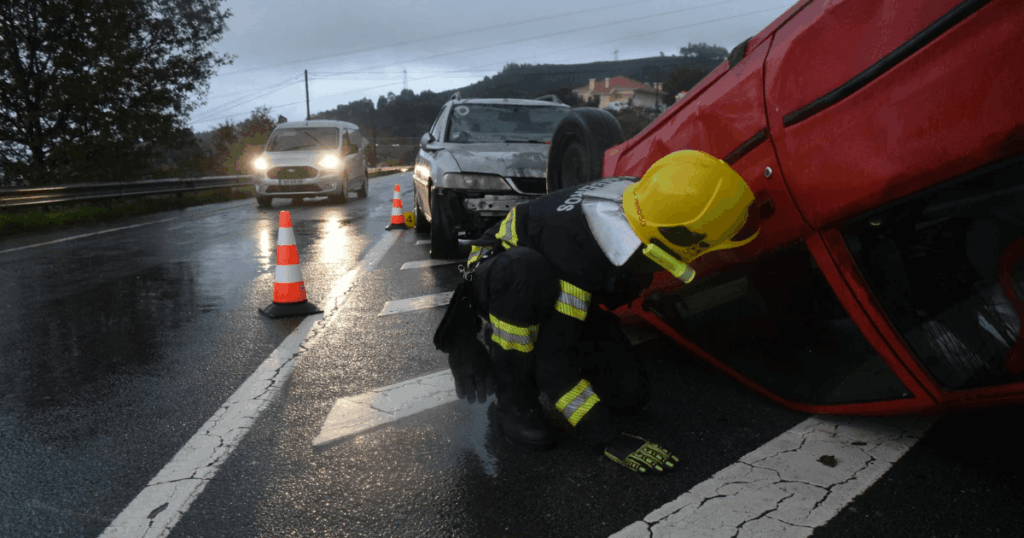
In the case of a fatal traffic accident, the claim is enforced against the liability insurer of the vehicle at fault. This is because the insurer assumes full liability for damages on behalf of the vehicle's operator. Compensation proceedings against insurance companies are usually faster and often end in an out-of-court settlement, which can effectively resolve major financial uncertainty and lighten the burden. However, if an agreement with the insurer cannot be reached, civil litigation remains the solution. While litigation often (though not always!) results in a higher compensation amount, civil lawsuits are not a short process.
In the case of fatal workplace accidents, employer liability insurance is not mandatory. If such insurance exists, the procedure is similar to that of a traffic accident.If there is no insurance, the claim must be enforced directly against the employer. The possibility of an out-of-court settlement depends on the employer's attitude: if they acknowledge liability for the fatal accident, they will likely consider an out-of-court settlement desirable; if they deny liability, compensation can often only be obtained through a civil lawsuit.
If the death did not occur as a result of a traffic or workplace accident (e.g., damages caused by a healthcare provider, commonly referred to as "medical malpractice"), a thorough investigation is always required to determine precisely what caused the accident (death) and who is responsible for it. Understanding these circumstances—especially the applicable legislation and judicial practice—requires professional legal expertise.

How and When Should You Initiate a Claim Against the Insurer or the At-Fault Party?
In non-fatal accident cases, acting too quickly or rushing can often come at the expense of efficiency—and thus at the expense of full compensation. For instance, in severe personal injury cases, the recovery period is a critical factor, as it is only at the end of treatment that it becomes clear whether the injury is permanent, whether improvement or deterioration is expected, etc. All of these factors influence compensation, so it is wiser to wait patiently until all circumstances regarding the damages are final, allowing the compensation to be determined conclusively.
In fatal accident cases, however, it is better to take action as soon as possible after the death occurs. In most cases, there are no circumstances that warrant waiting; moreover, the loss of the deceased relative's income can be extremely burdensome, especially considering that probate proceedings can drag on for months or even years.
Required Documents and Evidence Following the Tragedy
Regarding grievance damages claimed for the violation of the right to live in a complete family, judicial practice requires the relative of the deceased to prove that they maintained a good relationship and regular contact with the deceased—meaning they must demonstrate that the relative's death caused them genuine, severe emotional pain. From a layperson's perspective, this might seem outrageous, as the loss of a close relative is obviously tragic. However, the court attempts to screen out individuals who might merely be "taking advantage of" a fatal accident to obtain "easy money."
In one landmark case, for example, the Kúria (Highest Court) found a grievance damage claim brought by the son of a deceased person to be unfounded. During the lawsuit, it emerged that the son had not spoken to his father for many years, had never reached out to him, that their relationship was completely broken, and there was no indication they were even on speaking terms. According to the Kúria, it was clear from the evidence and facts that no relationship existed between them; thus, a close relationship could not be established, rendering the claim for grievance damages groundless.
A close relationship is most commonly proven through witness testimony, though online conversations and chat logs can also serve as appropriate evidence.
If the emotional pain exceeds the level of "normal" grief, an forensic expert (expert witness) (court-appointed specialist) may also be required.

In the case of minor children, courts usually accept as a matter of common knowledge that losing a parent results in severe emotional pain and further disadvantages in a child's life. In such cases, however, a court-appointed child psychologist expert is more frequently required (naturally, only if the surviving parent consents), as the impact of the death on the child requires a more thorough assessment.
For financial compensation claims, evidence proving the income of the deceased relative is usually the most critical. The necessity of other evidence depends on which additional compensation items are being claimed, making it impossible to define all required documents in advance.
If you have any questions, feel free to contact us by phone at +36 1 783 3578 or by email at office@drszentklaray.hu .