

What Are the Most Common Problems? – Breach of Contract / Defective Performance in Construction and Real Estate
Defective performance occurs when the service specified in the contract (e.g., the purchased real estate) fails to meet the quality requirements stipulated in the contract or prescribed by law. These quality defects are divided into two main categories: requirements specified in the contract and requirements stipulated by law.
A contractually specified quality requirement could be, for example, that the real estate must feature plastic window frames at the time of handover. If this condition is not met, a defective performance has occurred.
Regarding statutory quality requirements, the general rule prescribed by law is that the item must be fit for its intended purpose. Therefore, a real estate property (e.g., an apartment) must be fit for habitation even without a specific contractual clause to that effect. This includes, for instance, having public utilities (electricity, water, gas) connected and fully functional. Without these, a property used as a dwelling cannot fulfill its basic function.
Design and Construction Defects in Building Projects
In construction, defective performance most frequently arises in connection with the build itself: the contractor fails to build the property in accordance with the construction plans. It is impossible to list everything that can go wrong, but the most common issues include deviations from the materials specified in the plans, improper dimensions (e.g., insulation thickness), and poor workmanship.
Errors can naturally occur during the design process as well. For example, when the designer fails to design the property according to the client's wishes, or miscalculates something, resulting in flawed execution. Examples of such design errors include incorrectly recording dimensions on the plans (e.g., room size), preparing structurally unsound plans, or omitting certain requested aesthetic or functional features.

Defective Performance in Real Estate Purchases: When Issues Come to Light After the Purchase
When purchasing real estate, it is natural that defects often come to light only after residing in the property for an extended period. However, the law imposes a requirement on the buyer: there are certain defects that they should have recognized.
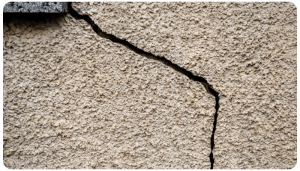
A defect is classified as a hidden defect when it is not obvious. This is very common in real estate, as there may be defects that are not visible to the naked eye. Structural defects—such as shifts or leaning in walls—are typically non-visible or difficult to detect. In the case of hidden defects—where the buyer was not expected to, or could not, notice the issue—the seller bears statutory warranty liability.
If the real estate contains a defect that the buyer recognized, or should have recognized (e.g., through a simple inspection), the seller is not liable for defective performance. An obvious defect would be, for example, if the property is crumbling, in which case the buyer should clearly recognize that the property is unfit for habitation.
How Does the Law Protect You? – Rules of Real Estate Statutory Warranty and Commercial Guarantee
In such cases, the law clearly protects the buyer and hands them several legal tools in the event of defective performance: statutory warranty rights.
Statutory warranty represents a legal obligation to stand behind performance. In cases of defective performance, the most common statutory warranty right covering the majority of claims is the implied warranty of conformity.
Alongside implied statutory warranty, commercial guarantees are also a common tool. Under a guarantee, the buyer may choose from options established either by statute or by contract. For newly constructed properties, a specific regulation—Government Decree No. 181/2003 (XI. 5.)—governs these options. The remedies under a guarantee frequently match those available under statutory warranty.
Implied Warranty Rights: Repair, Price Reduction, or Rescission?
Implied warranty rights resulting from defective performance can be categorized into two tiers:
In the first tier, the buyer may demand repair or replacement. These essentially represent remedies in kind (e.g., replacing the window frames in the example above). Most instances of defective performance can be resolved and closed this way, making it the most straightforward path. These remedies sit in the first tier because it is in the interest of both parties that the contract be performed, thereby avoiding greater complications.
The second-tier warranty rights include price reduction, having the defect repaired by oneself or a third party at the seller's expense, and, as a last resort, rescission of the contract.
Second-tier warranty rights may only be claimed if the seller refuses to carry out the first-tier remedies (repair or replacement), fails to complete them within a reasonable timeframe, if the buyer's interest in performance has ceased, or if the seller denies defective performance altogether.
In the case of a price reduction, money can be claimed because the defective item is worth less than it would be in a defect-free condition. Therefore, the difference in value between the defective and defect-free property can be claimed. However, a price reduction is not identical to the cost of repair, as the two are fundamentally different concepts. Determining a price reduction requires an expert opinion to attest to this difference in value.
In the case of repair or repair by a third party, the associated costs can be reclaimed from the seller.
In the case of rescission, the general rules of contractual rescission apply: the contract is terminated retroactively to the date of execution, original conditions must be restored (return of the property, refund of the purchase price), and related damages may be claimed.

How Long Can Real Estate Warranties Be Enforced?
Depending on whether a statutory implied warranty right or a commercial guarantee is being enforced, different limitation periods apply.
Statutory implied warranty rights for real estate can be enforced within 5 years from the date of performance.
Under a commercial guarantee, claims must always be enforced within the period specified in the underlying contract or statute, meaning there is no uniform general deadline.
When Is Compensation for Damages Due in Defective Performance?
In defective performance cases, claiming damages is a secondary, less frequent remedy. The primary purpose of defective performance rules is precisely to cure the deficiency; thus, if statutory warranty or guarantee rights are successfully enforced, there are technically no remaining damages to the property, as those have been remedied.
Damages in defective performance scenarios typically come into play for so-called consequential damages. For instance, if the buyer must retain an attorney to enforce their statutory warranty claims, those legal costs may qualify as damages directly linked to the defective performance.
Summary: Defense and Legal Enforcement in Defective Performance
In summary, buyers are very well protected in cases of defective performance related to real estate, provided they did not neglect their duty of inspection and there were no obvious defects they should have recognized. Statutory warranty rights and guarantee rights fully cover claims arising from defective performance, prioritizing remedies in kind (such as repair), allowing both parties to resolve the dispute satisfactorily. If remedies in kind are unfeasible or the seller shows no willingness to execute them, financial remedies are available, and as a last resort, the buyer may rescind the contract. For newly built properties, specific legislation governs guarantee rules, which are most often identical to statutory warranty rights. Sellers cannot be exempted from liability for defective performance; therefore, if it is proven that the defect existed—and already existed at the time of contractual performance—the seller is obligated to satisfy the buyer's statutory warranty or guarantee claim.
If you have any questions, feel free to contact us through any of the contact details available on our website.
If you are interested in learning about the difference between statutory implied warranty and commercial guarantee, please read our blog post below:
https://drszentklaray.hu/en/blog/warranty-guarantee-guaranty-what-is-the-difference